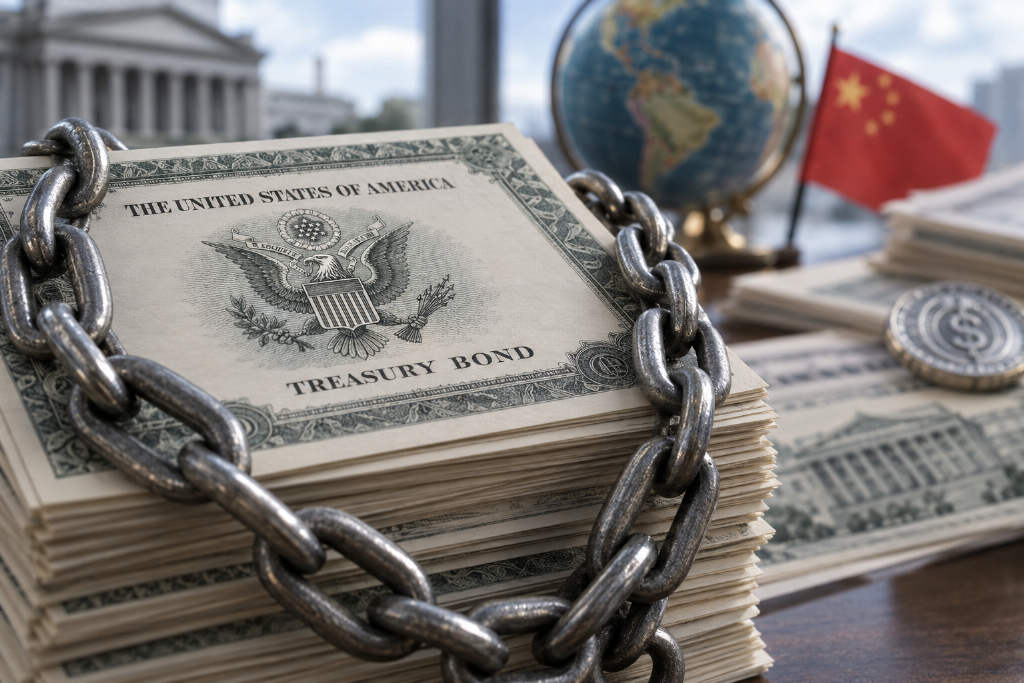
global debt2026-10-02 00:30:58IIF says global debt hit a record $365 trillion as stablecoin issuers raise Treasury holdingsGlobal debt climbed to a record $365 trillion, rising by $10 trillion over the first half of the year, according to the Institute of International Finance’s Global Debt Monitor dated Sept. 23 and cited by Cryptopolitan. The report said debt in emerging markets increased by $6.5 trillion to $110 trillion, with China making the largest contribution. In a separate report dated Sept. 28, the Federal Reserve Bank of San Francisco said foreign investors’ share of U.S. Treasuries had fallen from a peak above 50% in the late 2000s to about 30% by early 2026. The bank also said stablecoin issuers have been buying short-term Treasuries faster than Japan since 2023, and estimated that stablecoin demand for short-dated U.S. government debt could nearly double to around $400 billion by 2030.90
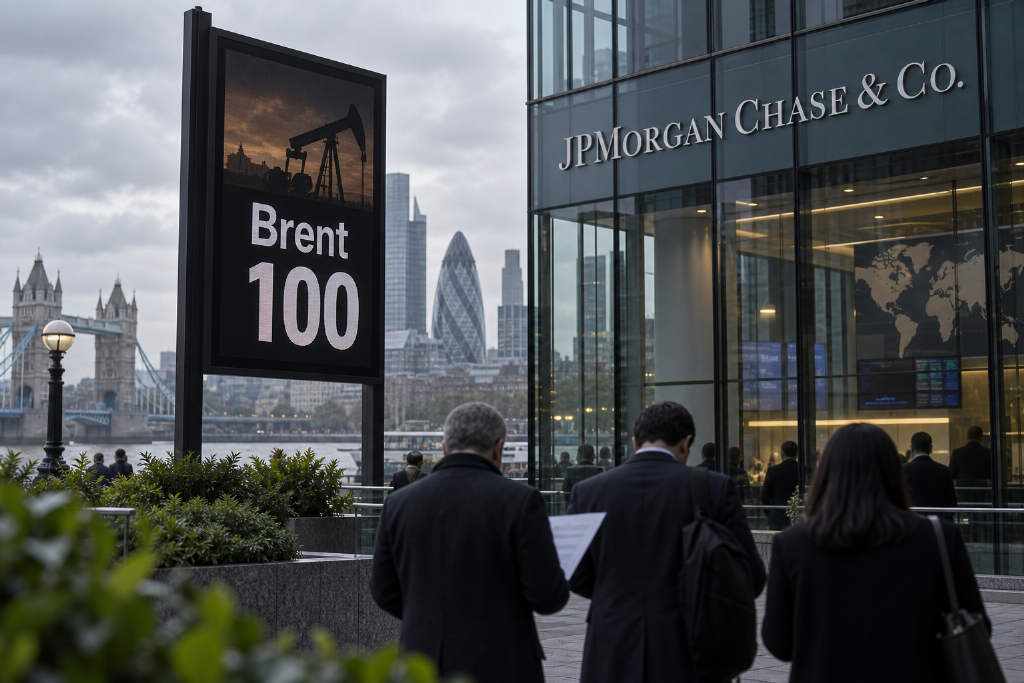
JPMorgan2026-09-15 08:33:32JPMorgan says Brent above $100 has hit sentiment, but the equity pullback still looks buyableJPMorgan argued in a Sept. 14, 2026 equity strategy report that the recent sell-off in global stocks, triggered after Brent crude moved above $100 and reached $107.6 on Sept. 10, should be viewed as a buying opportunity rather than a reversal in trend. The bank said oil prices are likely to steer risk appetite in the near term, yet warned against projecting the latest bout of volatility too far into the future. Strategist Mislav Matejka said the market has repeatedly gone through an “escalation to de-escalation” pattern over the past two years, and investors who turn bearish purely on the oil shock risk being caught out if tensions ease. The report also pointed to improving earnings revisions, firmer manufacturing data in the euro area and the U.S., and bond yields that remain below the level where stock-bond correlations could flip. JPMorgan kept an overweight on equities, a neutral stance on bonds, and an underweight on cash. Regionally, it favored emerging markets and the euro area, while sector preferences remained tilted toward materials, industrials and consumer discretionary. The bank said the main risks still come from a further spike in oil and any fresh geopolitical escalation.580
JPMorgan2026-09-15 08:09:08JPMorgan says oil-driven equity pullback is a buying opportunity, keeps overweight on stocksJPMorgan said in a Sept. 14, 2026 equity strategy report that the latest global stock-market pullback, triggered by Brent crude breaking above $100 and higher bond yields, should be treated as an opportunity to add equity exposure rather than a signal to join the sell-off. The bank argued that the trend in equities has not reversed, even as risk appetite remains sensitive to near-term moves in oil. It also said third-quarter earnings, starting in October, could help calm markets. The report, written by analyst Mislav Matejka, said Brent reached $107.6 on Sept. 10 and that the recent setup fits the bank’s repeated "escalation to de-escalation" pattern seen over the past two years. JPMorgan maintained overweight on equities, neutral on bonds and underweight on cash. Regionally, it favors emerging markets and the euro area, while keeping the U.S., Japan and the U.K. at neutral. By sector, it prefers materials, industrials and consumer discretionary, while staying underweight energy, consumer staples, healthcare and financials. The bank added that a further spike in oil prices and geopolitical escalation remain the main risks.870
BlackRock2026-09-15 01:42:44BlackRock returns to overweight emerging-market stocks on AI resource and earnings betBlackRock has shifted back to an overweight view on emerging-market equities, arguing that the artificial intelligence buildout could lift the value of scarce resources and support stronger corporate earnings across key regions. In a Monday report, strategists in the firm’s research unit, including Wei Li, said South Korea and Taiwan sit at the center of the semiconductor and memory-chip supply chain, while Latin American markets offer exposure to the commodities and infrastructure needed for AI expansion. The call marks a reversal from BlackRock’s June downgrade, when the asset manager cut emerging-market stocks to neutral and warned that AI concentration and leverage concerns, especially in South Korea, had weakened the risk-reward profile. BlackRock said deleveraging in the South Korean stock market after a sharp sell-off in July helped support its renewed overweight recommendation.670
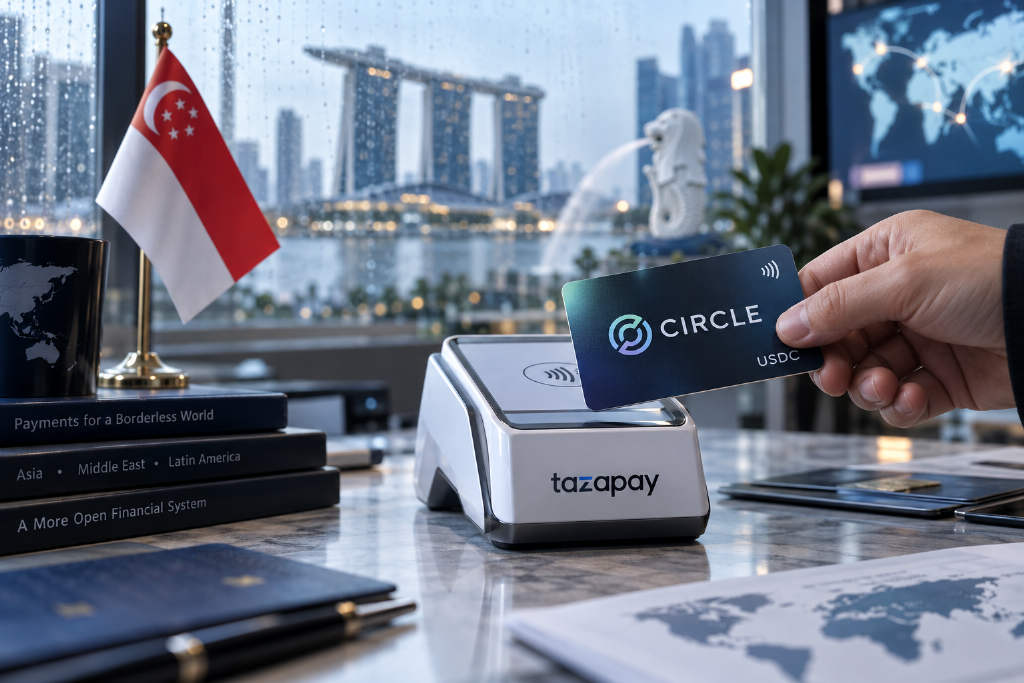
Circle2026-09-14 03:04:41Circle reportedly plans $400 million Tazapay deal to expand USDC in emerging marketsCircle is reportedly set to acquire Singapore-based payments firm Tazapay for $400 million, a deal that would bring local payment rails, banking relationships and licenses across more than 100 markets into the USDC issuer’s network, according to a CoinDesk exclusive. The report frames the move as a push to strengthen Circle’s cross-border payments stack, especially in regions where Tether’s USDT has long held the upper hand, including parts of Asia and Latin America. Tazapay’s footprint could help Circle address the local compliance, collection and payout work that its Circle Payments Network does not directly handle today. The story also places the acquisition in a broader race over stablecoin payments, where banks in the U.S. and Europe are developing tokenized products and the Open USD initiative, led by Stripe with more than 100 participants including Visa, Mastercard and Coinbase, is also seeking a foothold.1080
Circle2026-09-13 13:00:00Circle’s $400M Tazapay acquisition targets emerging-market payment links for USDCCircle is buying Tazapay in a $400 million deal aimed at gaining access to the payment and market links the company has built across emerging markets, according to CoinDesk. The rationale is strategic rather than purely financial: those connections can take years to establish, making them difficult to replicate quickly. The move comes as competition in stablecoins shifts toward regions where digital dollars are being used more broadly for transfers and payments. One expert told CoinDesk that the next major battleground for stablecoins is in emerging markets. For Circle, the acquisition points to a push to widen USDC’s reach in places where rival Tether has long held a stronger position.760
Institute of 2026-09-11 15:55:45IIF report shows emerging-market debt inflows rose to $242.9 billion through AugustA report from the Institute of International Finance showed that debt inflows into emerging markets reached $242.9 billion through August this year, up from $212.0 billion in the same period last year. At the same time, equity outflows from emerging markets climbed to $88.1 billion, a sharp increase from $7.4 billion a year earlier. The figures were cited in a ChainCatcher market analysis brief. The update points to stronger inflows into emerging-market debt while stock-related flows moved in the opposite direction over the same period. No further breakdown or country-level detail was provided in the item.740
OSL2026-09-09 04:17:27OSL teams up with Waka to add stablecoin settlement to emerging-market trade flowsOSL Group, listed in Hong Kong under HKEX:863, said it has entered a partnership with Waka, a payments platform focused on connecting liquidity and settlement networks across emerging markets. Under the arrangement, OSL will integrate its institutional-grade stablecoin infrastructure into Waka’s settlement system. The setup includes stablecoin-to-U.S. dollar conversion and U.S. dollar payment capabilities, with a focus on trade corridors linked to Africa and broader global commerce. OSL said the partnership is intended to bring compliant U.S. dollar liquidity to Asia-Africa trade routes that have long faced gaps in access to traditional banking services. The company also described the move as an expansion of its stablecoin payments footprint in emerging markets. Beyond the initial integration, the two firms are exploring additional collaboration tied to African markets and cross-border settlement. Kevin Cui, executive director and chief executive officer of OSL Group, said stronger payment infrastructure can materially improve daily life and business operations in regions connected by Asia-Africa trade channels. OSL added that it plans to deepen its presence in Africa and in other markets over time.910